


The Benefits of Hinge Cutting Trees for Deer Habitat and Wildlife Conservation
- The Wilsons

- Mar 4
- 3 min read
Creating and maintaining healthy wildlife habitats is essential for supporting diverse ecosystems. One effective method used by land managers and conservationists is hinge cutting trees. This technique not only improves habitat quality for deer but also benefits a wide range of wildlife species. Understanding how hinge cutting works and why it matters can help landowners and wildlife enthusiasts make informed decisions that support nature.
What Is Hinge Cutting and How Is It Done?
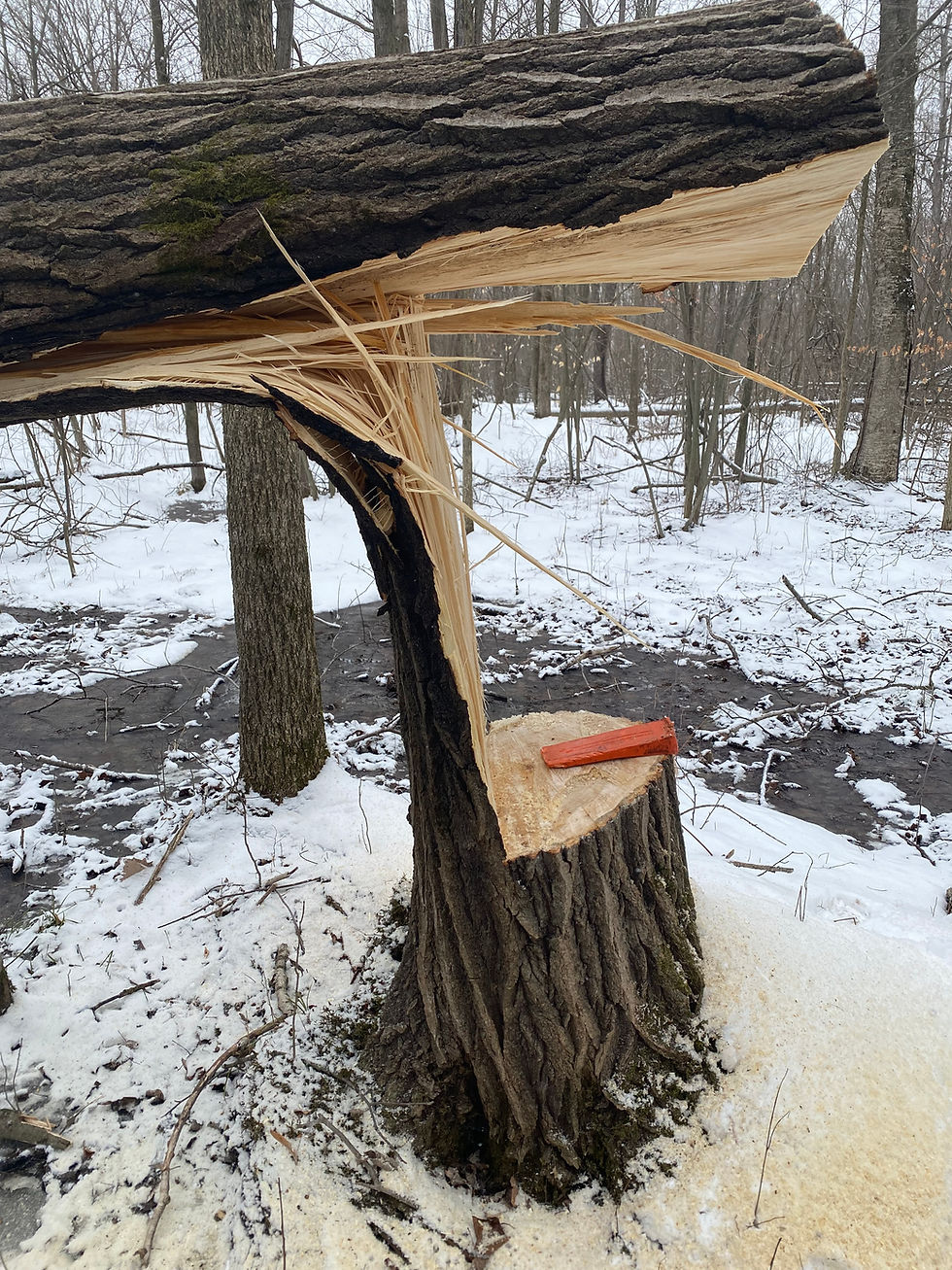
Hinge cutting involves partially cutting a tree so it remains attached at the base, allowing it to bend over without falling completely. This creates a living, fallen tree that provides food and cover for wildlife. Unlike felling a tree entirely, hinge cutting keeps the tree alive, which encourages new growth and maintains the tree’s nutritional value.
The process typically includes:
Selecting small to medium-sized trees, often hardwoods like oak, hickory, or cherry.
Cutting through the trunk about two-thirds of the way down, leaving a “hinge” of uncut wood.
Bending the tree over so it leans or lies on the ground but stays rooted.
Leaving the tree in place to sprout new shoots and leaves.
This method is often used in managed forests, wildlife areas, and private lands to improve habitat quality without clear-cutting or damaging the ecosystem.
Why Hinge Cutting Benefits Deer
Deer rely heavily on browse—leaves, twigs, and shoots from woody plants—for nutrition, especially during fall and winter when other food sources are scarce. Hinge cutting enhances deer habitat in several ways:
Increases browse availability: When trees are hinge cut, they produce fresh shoots and leaves that deer find highly palatable. This provides a reliable food source during critical seasons.
Improves nutrition: New growth from hinge-cut trees tends to be more nutritious and digestible than older, tougher branches.
Creates cover: The bent trees form natural shelters that protect deer from harsh weather and predators.
Supports fawning areas: Dense browse and cover help does hide and protect their fawns during early life stages.
For example, studies in the southeastern United States show that hinge cutting oak and hickory trees can increase deer browse by up to 40% in treated areas. This directly supports healthier deer populations and better hunting opportunities.
Benefits for Other Wildlife Species
Hinge cutting does not only help deer. It also supports a variety of wildlife by improving habitat complexity and food availability:
Birds: Many bird species use the dense cover created by hinge-cut trees for nesting and protection. The new growth attracts insects, which serve as food for insectivorous birds.
Small mammals: Animals like rabbits and squirrels benefit from the increased browse and shelter.
Pollinators and insects: The fresh shoots and flowers on hinge-cut trees attract pollinators, supporting broader ecosystem health.
Predators: Improved prey habitat indirectly supports predators such as foxes and owls by maintaining balanced food chains.
This diversity strengthens the overall ecosystem, making it more resilient to environmental changes.

Practical Tips for Landowners and Wildlife Managers
If you want to use hinge cutting to improve wildlife habitat, here are some practical tips:
Choose the right trees: Focus on species that deer prefer, such as oaks, hickories, dogwoods, and cherries.
Select appropriate tree size: Trees between 3 and 10 inches in diameter work best for hinge cutting.
Timing matters: Perform hinge cutting during late winter or early spring before new growth begins.
Create patches: Cut groups of trees in patches rather than isolated individuals to maximize browse and cover. Think den for the deer.
Monitor regrowth: Check the area regularly to ensure trees are sprouting well and adjust management as needed.
Combine with other practices: Use hinge cutting alongside food plots, controlled burns, or selective thinning for best results.
By following these guidelines, landowners can create sustainable habitats that support healthy deer populations and diverse wildlife.
Environmental and Conservation Impact
Hinge cutting supports conservation goals by promoting natural forest regeneration and reducing the need for heavy machinery or clear-cutting. It helps maintain soil stability and water quality by preserving tree roots and minimizing disturbance. This method also encourages biodiversity by creating a variety of plant structures and food sources.
In areas where deer populations are managed for hunting or ecological balance, hinge cutting provides a cost-effective way to improve habitat quality without extensive replanting or chemical treatments. It aligns with sustainable forestry and wildlife management principles.
Supporting Wildlife Starts with Smart Habitat Management
What could hinge cutting improve on your land
Wilson Wonders


Comments